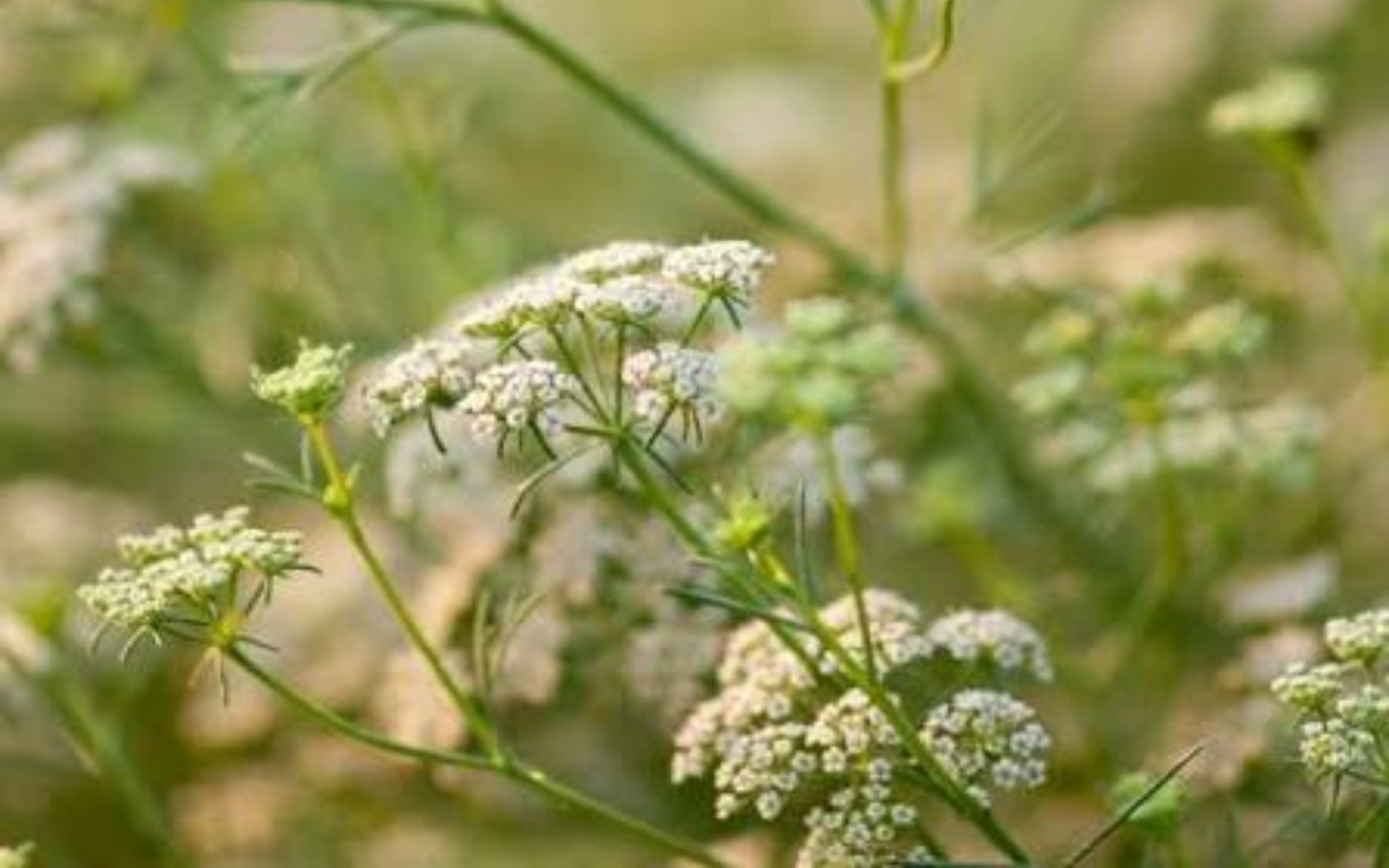

Five months ago, I joined the Holistic Agriculture Development Programme (HADP) team in Jammu and Kashmir, taking over the Review and Monitoring workstream - my first ever government-facing project as an Associate Consultant. My knowledge of J&K’s agriculture was limited to saffron, apples, and kalazeera, the last being an ingredient I vaguely remember hearing in my grandmother’s stories of the cooking in her childhood home. She would tell us about how kalazeera was a prized possession in the kitchen, reserved strictly for important occasions to elevate the flavour of rich mutton gravies and sometimes, pulao. I was, in part, excited to learn more about these ingredients beyond their use in our kitchens, but more than that, I was nervous - how could I be responsible for monitoring the progress of 29 projects in HADP, when I barely knew the first thing about how any of these crops were even grown?
As such, my first two weeks in the project went into going over the handover document as thoroughly as possible, trying to gather all the context I possibly could before I was faced with the real work. One particular stakeholder description in the document caught my eye - a senior official in the Agriculture Directorate, Jammu, described as ‘the POC for getting things done in Agri Jammu’. Thereafter, for most of my initial journey in HADP, I treated him as such. I would call him from time to time with data requests for various district and project reviews when the need came up and he treated me with the polite aloofness reserved for all outsiders of the government ecosystem.
A few weeks ago, when I finally got the chance to meet him in-person in Srinagar, something shifted. I took the opportunity to approach him with a clarification regarding a certain activity in HADP’s mushroom cultivation project. His explanation not only cleared my doubts, but also helped me understand other aspects of the project itself beyond what the dashboard could tell me.
From there, the conversation shifted to other HADP projects which needed attention, one of which was strengthening marketing reforms at the block-level, which had been stagnant due to the legal complexities of setting up mandis and the limited budget allocation. He asked me if I had any potential implementation ideas for the activity, took the time to hear me out, and offered to take it up with more senior officials for implementation if I could provide him with an initial framework or plan.
For the first time during the course of our interactions, I felt like I was a part of the system and not outside of it. This was my first lesson in how to navigate joining a government programme - that a stakeholder is more than just a contact. They are individuals with years of experience and context that the data simply cannot capture. And as I found in Srinagar, they are often just as interested in what you have to bring to the table as you are in learning from them.
A few days after this conversation, I used the inputs from our discussion to come up with a concept note detailing a revised implementation plan for setting up block-level mandis in J&K by leveraging the existing network of Farmer Producer Organisations (FPOs) to anchor these local mandis, all of which can be implemented within the existing legal framework for regulated markets and the allocated activity budget. The note has since been approved by the Mission Director and is now with the Agriculture Directorates for their inputs before we move towards implementation.
Figuring out stakeholder relationships to drive initiatives was one part of the job, the other was actually knowing what my job even was at this stage of the programme. After all, what do you do once four awareness campaigns have been conducted, all the big application targets have been hit, and tech monitoring systems are in place, with little scope or budget to take up new initiatives in the last leg of the programme?
As it turns out, a lot of it is just looking at numbers, trying to make sense of them. At this stage in the programme, there is sufficient data collected to conclude exactly which activities are going well, and which aren’t - and also to take the required action to make things move. The numbers can tell you that something is wrong, but speaking to officers and beneficiaries on the ground is what reveals the true story of the ‘why’.
One such number that caught my eye was the progress of HADP’s project on promotion of niche crops in J&K - the uptake of kalazeera nurseries was low, which also adversely impacted the subsequent area expansion efforts that the government had planned. I wondered why - with guaranteed government procurement of kalazeera planting material at attractive rates, which farmer would not want to take up this activity?
Speaking to the project directors and district officers, we found out that it takes 3-4 years for kalazeera to develop tubers that can be further propagated. This effectively means that farmers have to invest their own resources for a lock-in period of 3-4 years before they get the benefit of government procurement, while also paying the opportunity cost of not cultivating other high-value crops with a shorter gestation period. In short, the incentive structure for the activity does not align with the nature of the crop, and what it requires is an upfront benefit rather than a backended one.
This was my second lesson - that sometimes the most useful thing you bring to a programme as a newcomer is not what you know, but what you don't. It was precisely because I was new to the programme that I thought to question why a seemingly well-designed activity was not moving.
Asking such questions based on the numbers not only flagged problems, but also opened up new possibilities. For example, seeing the discrepancies in application numbers across activities drove my team members and me to ask the basic question - what kind of farmer would be likely to apply for a specific activity, such as setting up a fisheries unit, and how can we reach them? Using data from the baseline survey and other schemes such as PMFME, we created lists of farmers with specific profiles suitable for each activity for better targeting by district and block officials. We are already seeing the results, with applications increasing by 10-15% for some of the low uptake activities we identified.
There are many things I would have liked to know more about before joining HADP - the sector, the geography, and the minute technicalities of the programme. Five months into the programme, I have learnt a fair bit about agriculture in J&K - now that I know the actual biology and economics behind its cultivation, kalazeera has gone from being an ingredient I had only heard about in stories to a first-hand lesson in designing incentives in agriculture. Most importantly, though, this experience has changed how I approach moving into something completely new - from one project to the next, from one sector to another - building context as I go. Wherever I go next, I now know that I may not have all the answers at the onset, but at least I know where to look for them.